
Your first dizi
A dizi doesn't cost much, and its bright voice is a joy. The first sound takes a little patience: here's how to begin well.
Choosing one
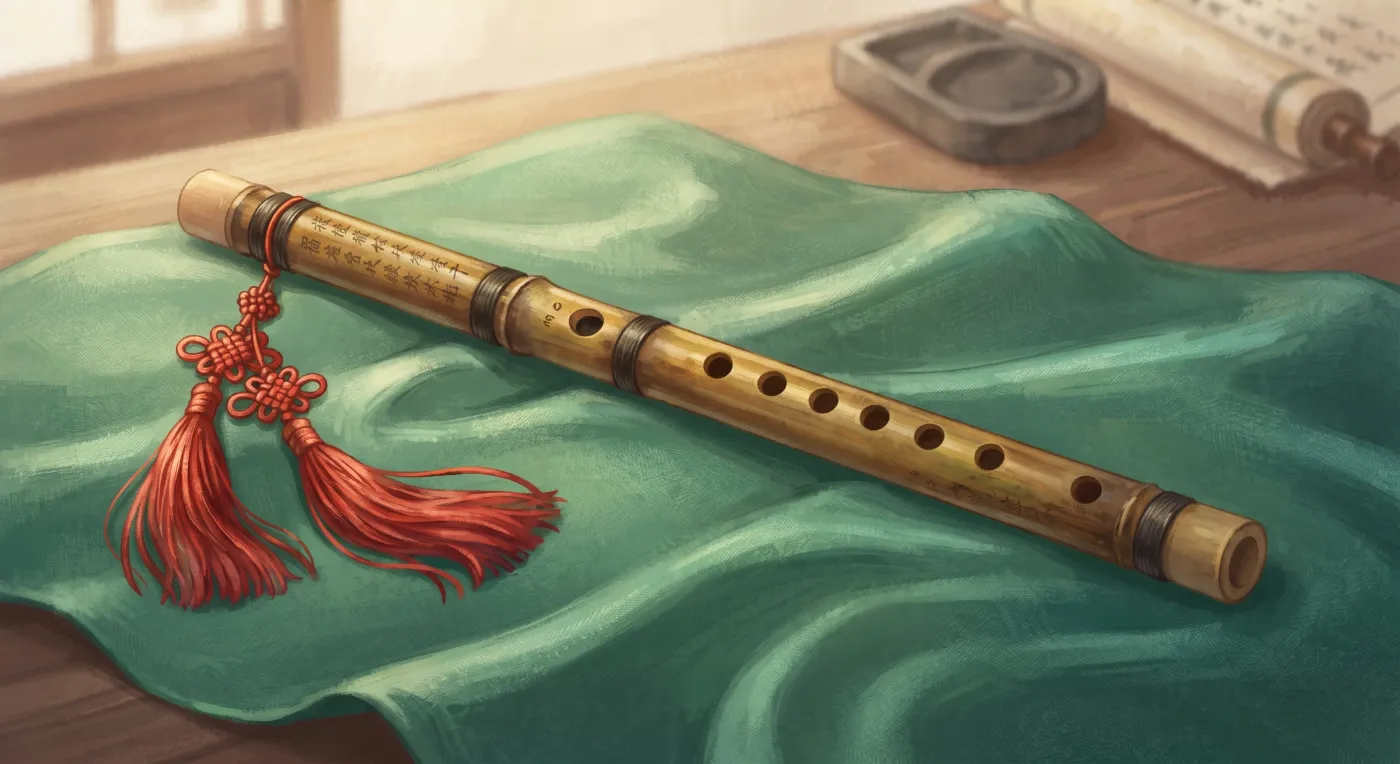
Start with a dizi in G (its lowest note, every hole covered, is D): it's a comfortable size for most hands, and it's the one our lessons expect. Music shops that sell Chinese instruments, and teachers, can help you choose; a simple, well-made student dizi is plenty.
The membrane
Your dizi needs its membrane (dimo) glued over the membrane hole. Players use a special dizi glue (some use a little garlic juice), and press the membrane on with tiny, even wrinkles across it. Too tight and the dizi sounds dull; too loose and it buzzes too much. Ask a grown-up, or a teacher, for the first one.
Holding and blowing
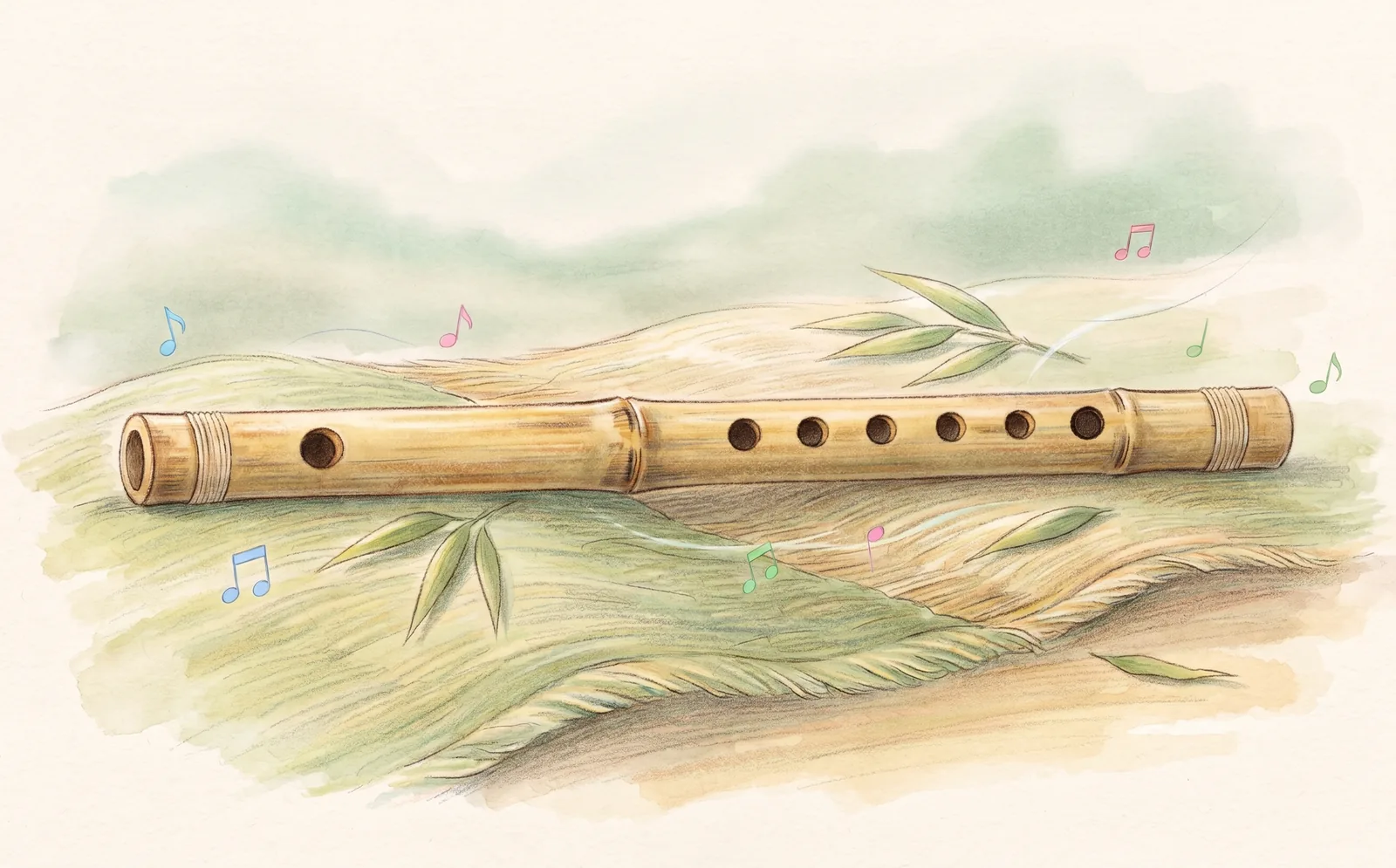
Hold the dizi to your right, the mouth hole at the middle of your lower lip. Your left hand covers the three holes nearest your mouth, your right hand the other three, with the soft pads of your fingers. Blow a thin, gentle stream across the hole, as across the top of a bottle, and turn the dizi a little until the note rings.
Looking after it
After playing, wipe it dry and keep it out of hot sun and very dry rooms: bamboo can crack. A new membrane every so often keeps the sound bright.
Our dizi lessons are new and still being tested: they listen as you play and, if you allow the camera, show the fingering on your own hands. If something sounds wrong to you, tell us.