
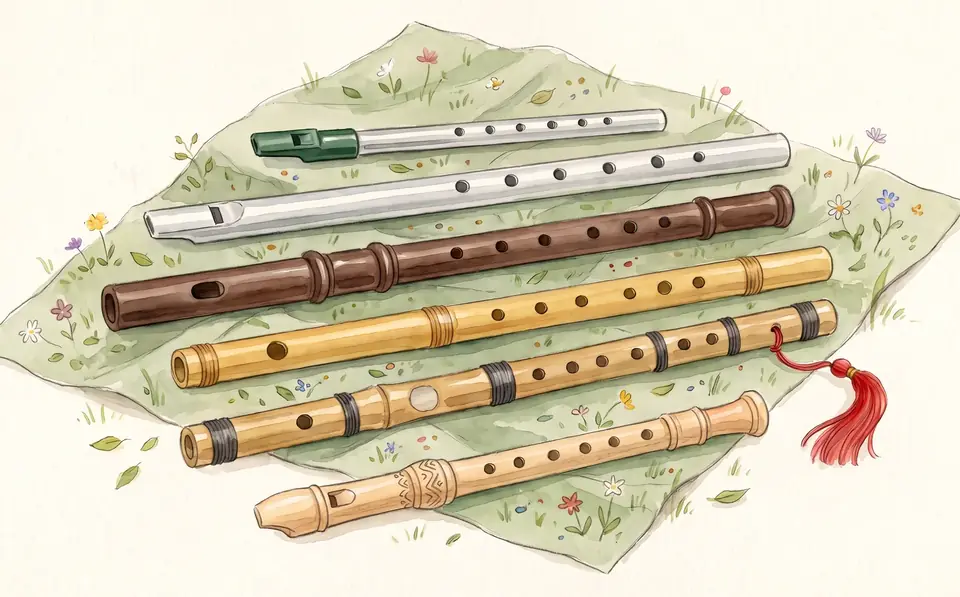
Your first low whistle
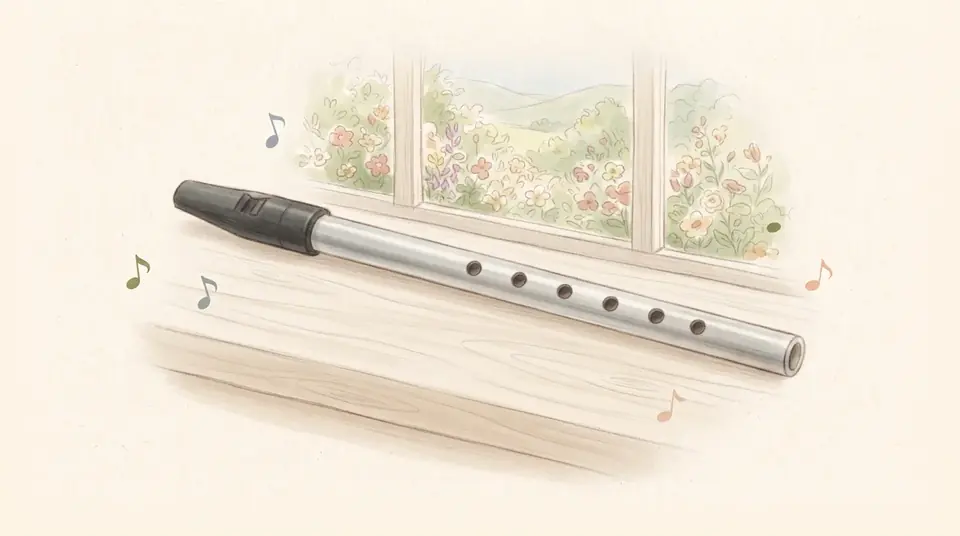
A low whistle is easy to sound and a joy to play slowly. The new part is the stretch of your fingers. Here's how to begin.
Choosing one
Start with a low whistle in D, the most common, and the one our lessons expect. Try to hold one before you buy: some are longer and wider than others, and a comfortable reach matters.
The pipers' grip
The holes are wide apart, so cover them with the flat middle part of your fingers, not the tips, as bagpipe players do. Keep your hands relaxed; tension makes it harder.
Breath and care
Blow slow, warm air: much less than you'd think. After playing, shake out the moisture and wipe it dry.
Our low whistle lessons are in the lab: we're still checking them on real whistles.
No instrument yet? You can start the lessons now on the virtual one, on the screen, and go on with your own when it arrives.
Start on the virtual one ›