
Your first tin whistle
A tin whistle is one of the kindest first instruments: it doesn't cost much, it's light, and a note comes out the first time you blow. Here's how to begin well.
Choosing one
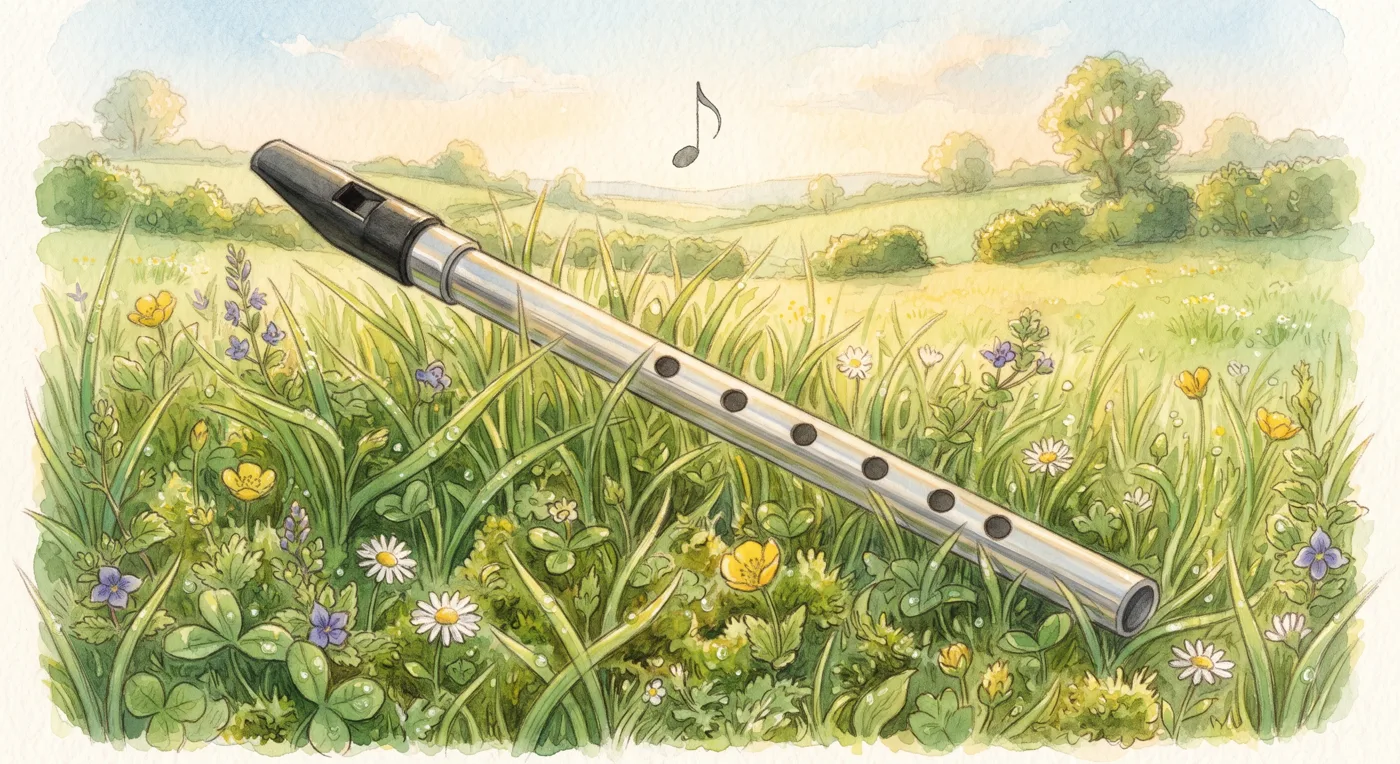
Start with a whistle in D. It's the most common, most tunes are written for it, and it's the one our lessons expect.
A simple, inexpensive whistle is fine for learning. Some cheaper ones are a little squeaky in the high notes; if you can, try one before you buy, or ask a music shop which whistle their students use. A whistle with a plastic mouthpiece is easy to clean and comfortable to play.
How to hold it
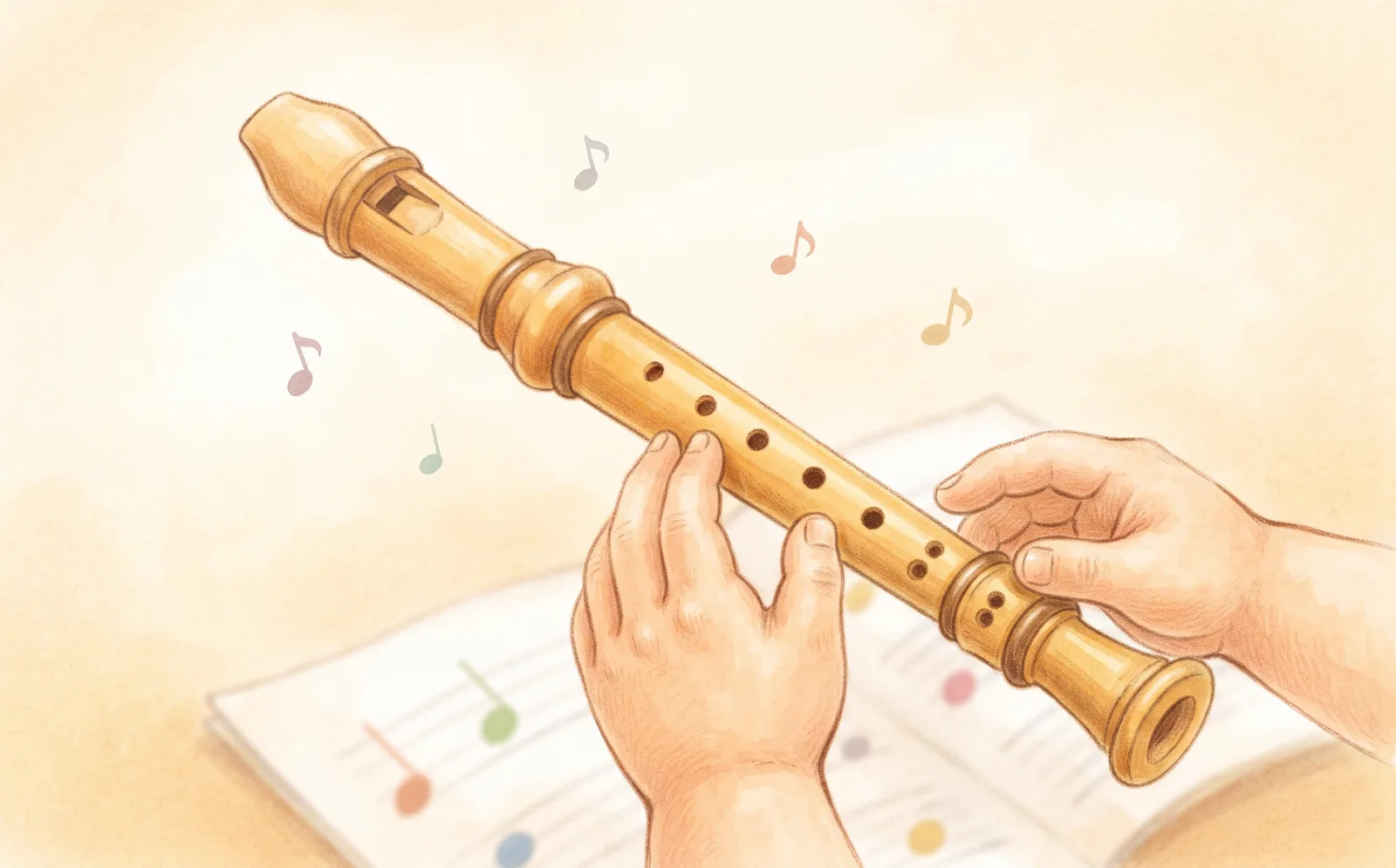
Hold the whistle pointing down and away from you, a little like a recorder. Your left hand goes on top and covers the three upper holes with the pointer, middle and ring fingers. Your right hand covers the three lower holes the same way. Your thumbs rest behind, holding it steady.
Cover the holes with the soft pads of your fingers, not the tips. A tiny gap under one finger is enough to make a note squeak, so press flat and gently. Keep your shoulders loose and your fingers relaxed.
How to blow
Put the mouthpiece between your lips, not your teeth, and breathe out gently, as if you were warming your hands. The low notes need very little air. If it squeaks, it's almost always too much breath, or a hole that isn't fully covered.
For the second octave, keep the same fingers and blow a little faster. Let your ear guide you: when the note sounds round and sweet, that's the right amount.
Starting and stopping each note
To start a note cleanly, touch your tongue lightly behind your top teeth as you begin to blow, as if you were whispering "too". It gives each note a clear beginning.
Looking after it
After playing, tap it gently to shake out the moisture, or wipe it dry. Now and then, wash the mouthpiece in lukewarm soapy water and rinse it well. Don't leave a whistle in a hot car or in strong sun: plastic mouthpieces can soften.
Our lessons listen as you play and, if you allow the camera, show the fingering on your own hands. Ten calm minutes a day, starting each time with one long, soft note, is a lovely way to learn.