
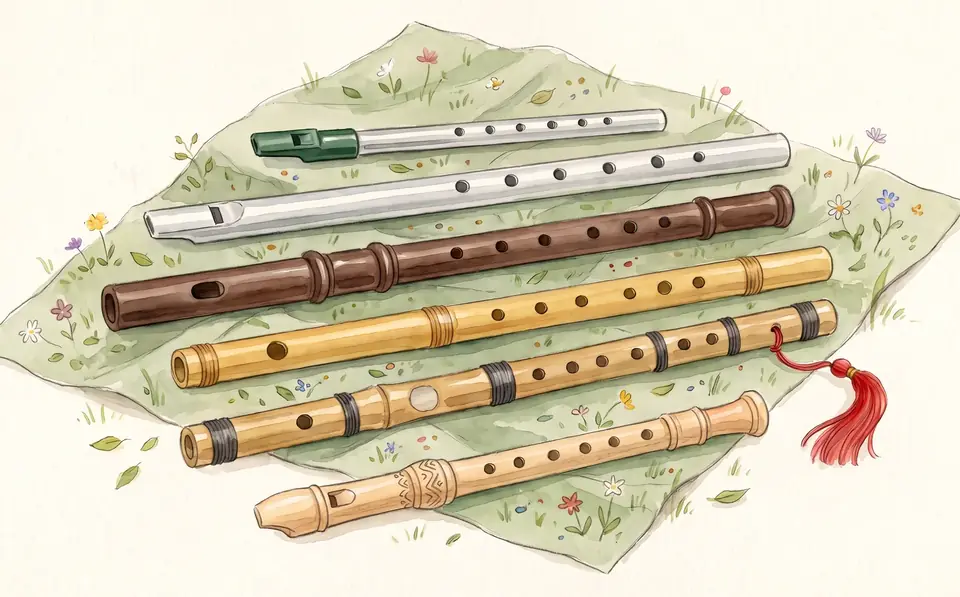
Your first Irish flute
An Irish flute takes a little patience to sound, and gives back a voice you'll love. Here's how to begin.
Choosing one
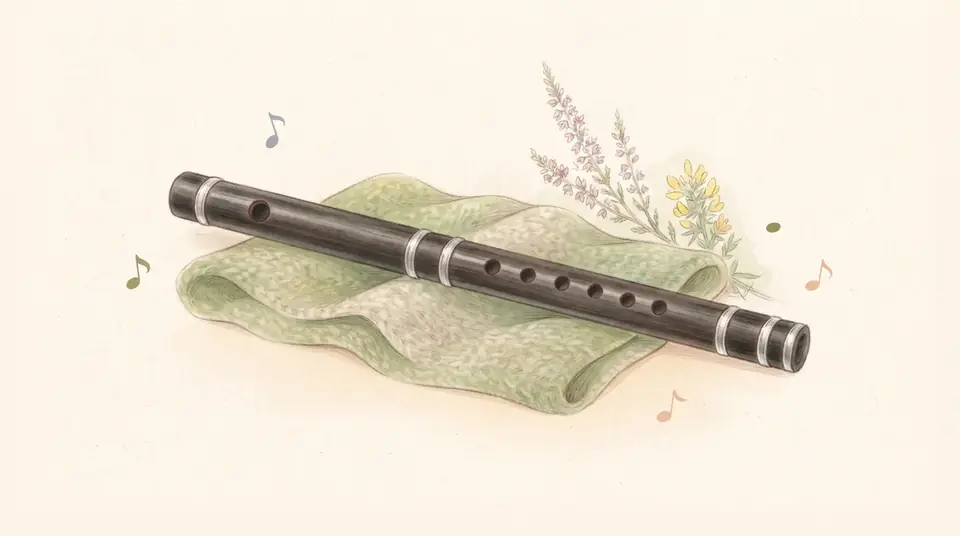
Start with a keyless flute in D, the key of most Irish music, and the one our lessons expect. Good beginner flutes are made of wood, or of polymer, which doesn't crack and needs less care.
The first sound
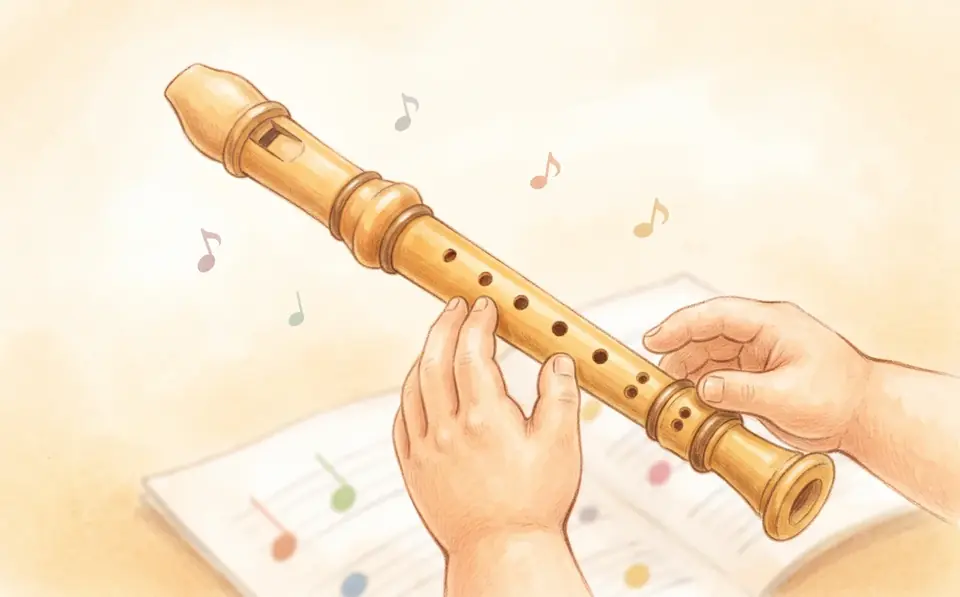
Hold the flute to your right, the mouth hole at the edge of your lower lip. Blow a thin stream across the hole, as across a bottle, and roll the flute a little toward you or away until the note comes clear. Cover the holes with the flat pads of your fingers: the holes are wide, so a relaxed hand matters.
Caring for the wood
Warm a wooden flute in your hands before playing, swab it dry after, and oil it now and then as its maker suggests. Keep it away from heat and sudden cold.
Our Irish flute lessons are in the lab: we're still checking them on real flutes.
No instrument yet? You can start the lessons now on the virtual one, on the screen, and go on with your own when it arrives.
Start on the virtual one ›