
How to play Amazing Grace on the tin whistle
The hymn written by John Newton in 1772, in a slow three-beat rhythm.
Free lessons, note by note, that listen as you play your own instrument and show you every fingering.
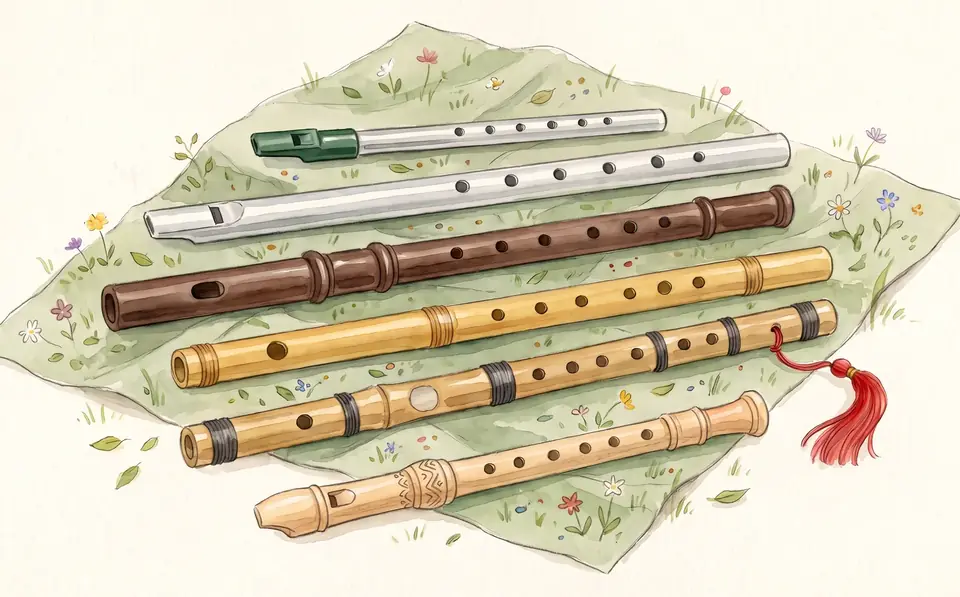
Your flute
Tin whistle
Listen and follow along
Press play: each note lights up as it sounds, and the picture above shows its fingering.
DGBGBAGEDDGBGBAD′
Longer blocks are longer notes. Tap one to hear it.
Sheet music
The same song in standard notation, with each note's name under it.
The notes as letters
D G B G B A G E D D G B G B A D′
Fingerings
Holes are counted from the end nearest your mouth.
D
Holes 1 2 3 4 5 6 covered
E
Holes 1 2 3 4 5 covered
G
Holes 1 2 3 covered
A
Holes 1 2 covered
B
Hole 1 covered
D′
Holes 2 3 4 5 6 covered
Colored holes are covered, black ones stay open.
More songs
- Hot Cross Buns
- Au Clair de la Lune
- Mary Had a Little Lamb
- Lightly Row
- Ode to Joy
- Jingle Bells
- When the Saints Go Marching In
- Old MacDonald Had a Farm
- Yankee Doodle
- Happy Birthday
- Twinkle Twinkle Little Star
- London Bridge
- Row, Row, Row Your Boat
- All My Little Ducklings (Alle meine Entchen)
- Go Tell Aunt Rhody
- Frère Jacques
- Morning Mood (Peer Gynt)
- Brahms' Lullaby
- Silent Night
- Joy to the World