
Music for the txistu
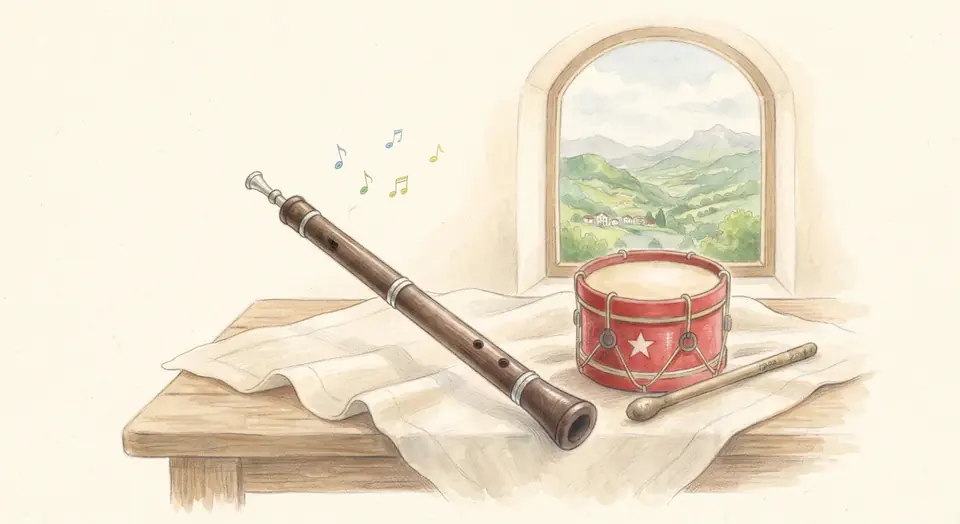
The txistu's music is music for moving: for dancing, walking through the streets and greeting people. Here are the kinds of tunes you'll hear, all of them traditional and shared by everyone.
The fandango and the arin-arin
Two dances that often come together: first the fandango, in a lilting three, then the arin-arin ("quick-quick"), lively and bouncing. At a festival the whole square dances them. Listen for how the drum keeps the dancers' steps.
The kalejira
A kalejira is a street tune: the txistularis walk through the town playing, and people follow. Its steady walking beat is a good one to practice with, because it never hurries.
The morning round
On festival days, txistularis go through the streets early in the morning to wake the town with music. It's one of the sweetest sounds of a Basque fiesta: bright notes over quiet streets.
The aurresku and the greeting
The aurresku is a dance of honor, danced for a guest, a couple on their wedding day, or the town. Its music is slow and proud. Before it, the txistu often plays "Agur Jaunak", a traditional greeting tune: a way of saying welcome with music.
How to listen
Listen to one txistulari: you hear a melody and a drum from the same person. Then listen for how the high notes ring: that's the breath at work. Search for txistu players from the Basque Country's music schools and town bands to hear the music at its home.