
What is the txistu?
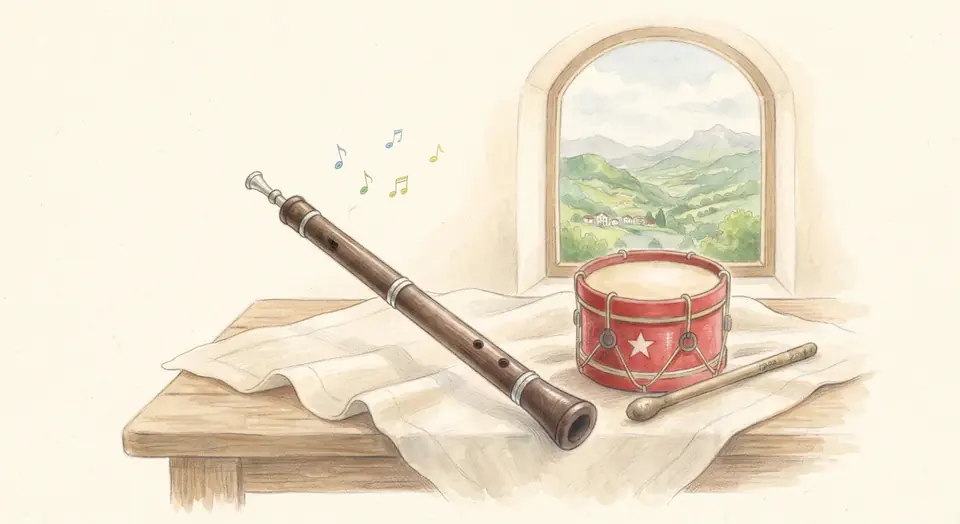
The txistu (say "CHEESE-too") is the flute of the Basque Country. It has only three holes, and it's played with one hand, because the other hand is busy beating a small drum. One player, two instruments: the txistulari.
A pipe and a drum
The txistu is a straight wooden pipe, about 42 cm long, with a mouthpiece at the top like a recorder's. You blow into it and the edge inside makes the sound: no special lips needed.
The left hand holds it and plays the three holes: two on the front, one for the thumb behind. The right hand beats the danbolin, a small drum hanging from the left arm. Playing a tune and a rhythm at once is the txistulari's art.
Three holes, many notes
How can three holes play a whole scale? With the breath. A gentle breath gives the low notes; a little more air makes the pipe jump up to a higher set of notes, with the same fingers. The txistu plays almost all its music on these higher notes, so the breath does half the work and the fingers do the rest.
That's why the txistu teaches something every flute player needs: listening to your own air.
Where you hear it
In the Basque Country the txistu is at the heart of festivals: it wakes the town in the morning, leads the street parades, and plays for the dances. Many towns have their own txistulari band, with several txistus, the larger silbote and a drum.
Pipes and drums played by one person are old and once were common across Europe. The Basque Country is where this tradition has stayed most alive.
Its family
The silbote is the txistu's big sister: longer and lower, it plays the second voice in a band. The xirula, from Soule in the northern Basque Country, is a smaller, higher three-holed pipe. Across the Pyrenees, Provence has the galoubet, and England has the pipe and tabor: the same idea, other places.
In F, or in F sharp
Most txistus today are in F, and some are in F sharp. They look the same; the difference is in the sound. Our lessons ask which one you have, and listen for it.