
What is the tin whistle?
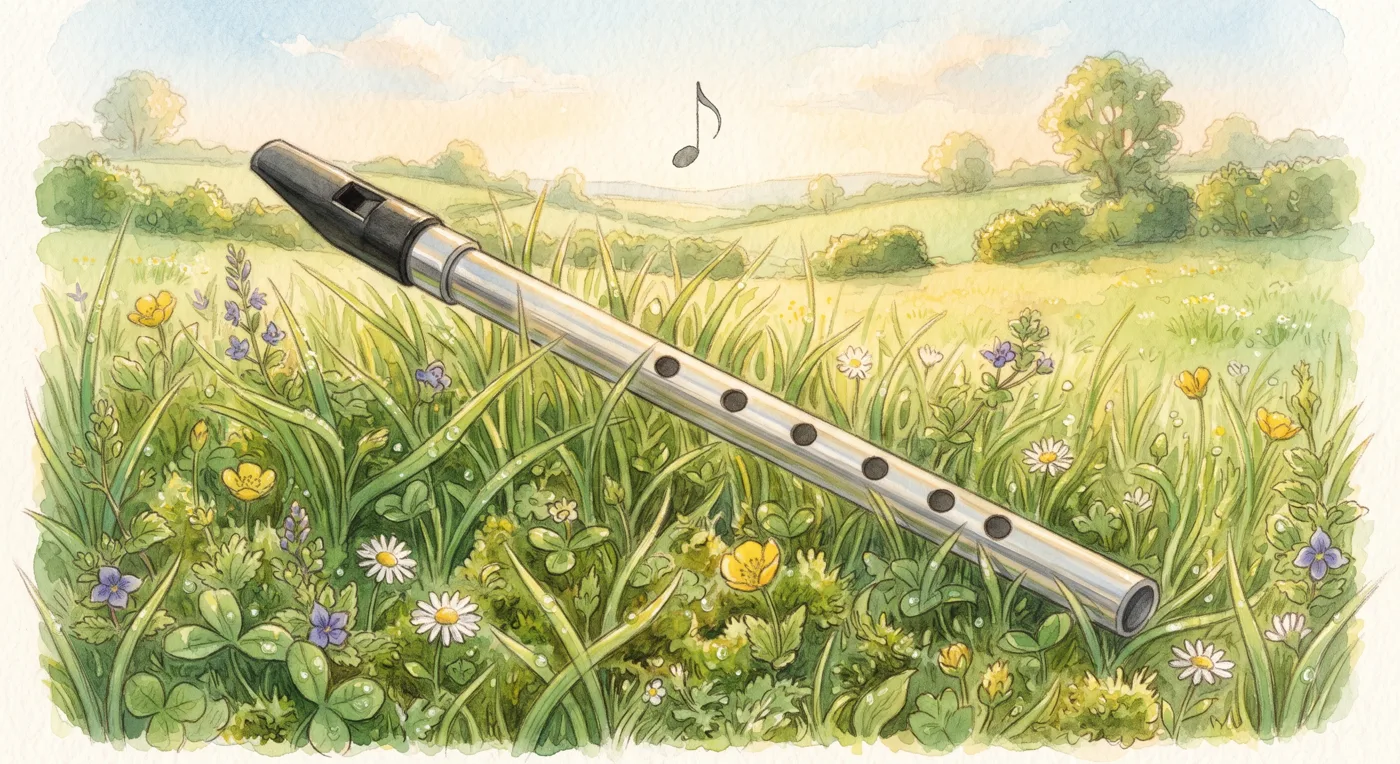
The tin whistle is a small, simple flute: a metal tube with a mouthpiece at the top and six holes for your fingers. It's light, it fits in a pocket, and it's one of the most loved instruments in Irish traditional music.
How it makes its sound
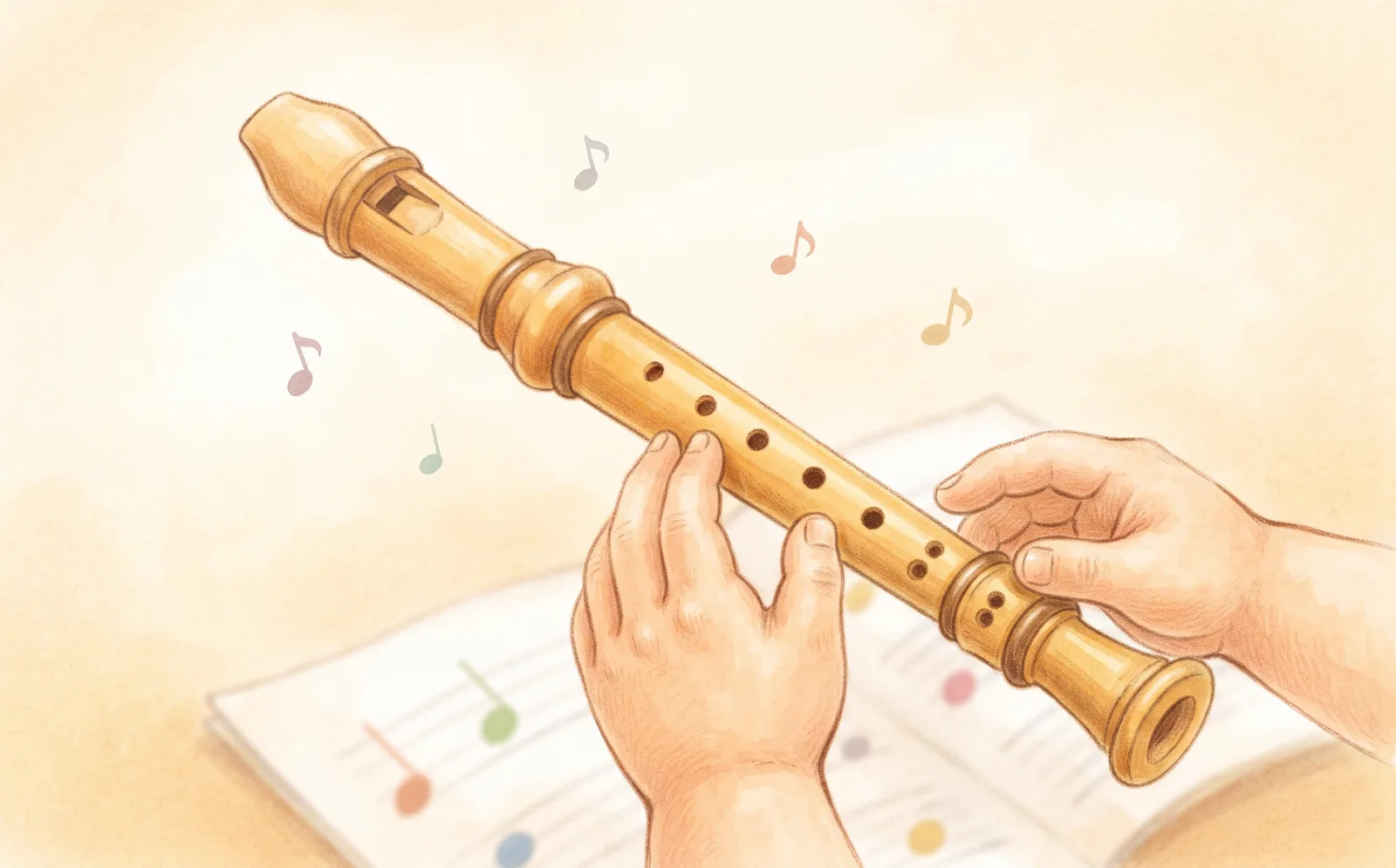
The tin whistle works like a recorder. Inside the mouthpiece, a narrow channel aims your breath at a sharp edge. The air splits on that edge and sets the air in the tube vibrating, and that is the note. You don't have to shape your lips at all: you just blow, gently.
Cover all six holes and you play the lowest note. Lift your fingers one by one, from the bottom, and the notes climb a scale. Blow a little harder with the same fingers and you play the same scale an octave higher. Two octaves from six holes and your breath.
Keys
Whistles come in many keys, named after their lowest note. The most common by far is the D whistle, the one most Irish tunes are played on, and the one most people start with.
There are also low whistles, much longer, with a deeper and softer voice. They're lovely, but harder to reach for small hands.
Many names
Tin whistle, penny whistle, Irish whistle, and in Irish, feadóg stáin: they're all names for the same little instrument. Today's whistles are made of brass, aluminum, nickel or plastic, and the mouthpiece is often plastic.
Where it comes from
Simple whistles of bone, wood and cane are very old, and are found all over the world. The tin whistle as we know it is usually traced to Robert Clarke, in England, in the 1840s, who began making whistles from tinplate, a cheap new material. They sold for very little, which is how the name penny whistle stuck.
Because it was cheap and easy to carry, the whistle traveled with people everywhere. In Ireland it became part of the music of dances and sessions. In South Africa in the 1950s, it was the voice of kwela, a joyful street music.
Why it suits a child
A first note on the whistle comes easily, so a child can make music in the very first minute. And because it asks for gentle breath, it also teaches a child to listen: soft air sings, hard air squeaks, and the ear learns the difference.